



Looking at the Ceiling
Copyright © Paul Brown
1996 All Rights Reserved
Commissioned by and first published in Imprint
the quarterly journal of the Print Council of Australia
Vol. 31, No. 4, pp. 21-22
Looking at the Ceiling
The Print Council of Australia
My printers: Imaging Tank
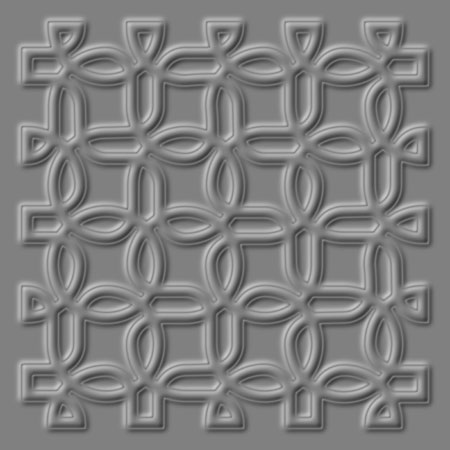 Ceiling Detail from the House of Signs is one of a series of recent
works on paper that share a
common process, one that has intrigued me for over thirty years. In naming the
work I was influenced by the stamped metal ceiling decorations that are common
in Australian colonial architecture. Like many other images in the series it
will become a part of "The House of Signs" - an interactive multimedia
work-in-progress. This will be a virtual environment that can be decoded and
explored via signs that are embedded in the decorative features of the
architecture.
Ceiling Detail from the House of Signs is one of a series of recent
works on paper that share a
common process, one that has intrigued me for over thirty years. In naming the
work I was influenced by the stamped metal ceiling decorations that are common
in Australian colonial architecture. Like many other images in the series it
will become a part of "The House of Signs" - an interactive multimedia
work-in-progress. This will be a virtual environment that can be decoded and
explored via signs that are embedded in the decorative features of the
architecture.
My recent work has been created on a Macintosh 71/66 AV computer running the Adobe PhotoShop and Macromedia FreeHand applications. I begin by working in FreeHand - a line artwork package designed for commercial graphics. My thirty year obsession has been tiling systems and the belief that simple elements can be permutated together to produce images where ... "the whole is greater than the sum of the parts".
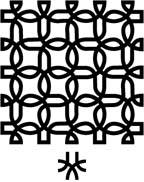 Figure 1 shows my starting image for "Ceiling". It's composed of a simple tile
(shown at the bottom) which is then rotated and permutated in a five by five
matrix. The loose edgepoints are capped and the result is a "knot" pattern
with similarities to Celtic art. This reference was unintentional but, given
the geometry of the tile, is perhaps a predictable outcome.
Figure 1 shows my starting image for "Ceiling". It's composed of a simple tile
(shown at the bottom) which is then rotated and permutated in a five by five
matrix. The loose edgepoints are capped and the result is a "knot" pattern
with similarities to Celtic art. This reference was unintentional but, given
the geometry of the tile, is perhaps a predictable outcome.
This line drawing is transfered into PhotoShop which is a digital darkroom product designed for photographers and photofinishers. Here it's possible to soften and blur the image, alter the brightness and contrast, create masks (or stencils), make negatives of all or part of the image and so on ... Although there are a whole host of special effects available I mainly use the basic features like those outlined above.
At this stage I'm mostly "playing" and exist in a dreamlike state where the overall image changes, evolves, is destroyed and reborn. Contrary to popular opinion the computer doesn't get in the way - it becomes an extension of my hands and mind. Like with oil paint (or piano or any other medium or instrument) it's necessary to work regularly and for long hours in order to achieve this relationship.
I save my work often using unique names that create a "tree" structure and allow me to backtrack and rework earlier ideas. The ability to save the entire working process in reusable form is a major advantage of working on a computer. Every so often something will evolve that catches my attention and it becomes the bud of a new branch. A lot of work is thrown away when it gets tired or overworked. I try to remember the path from earlier versions taking care not to repeat my mistakes. Eventually something jells and tells me it's ready. I save it immediately and make a cup of tea!
Now the hard work begins. Turning something I have glimpsed in my "oceanic" symbiosis and reverie into a viewable print on paper is a arduous and frustrating task. Something I would gladly hand over to an assistant if I had the good fortune to have one! The first proof prints are made on my inexpensive StyleWriter 2500 ink jet printer. The artwork is very delicately manipulated so the overall quality is not effected whilst the print begins to take shape. Eventually it's ready for professional proofing.
The final proofs and prints are made on an Iris printer. It's an $150,000 high fidelity system that combines an electrostatic ink jet print head with a pump mechanism and produces extremely fine detail and saturation. Originally developed as a proofing printer for the reprographics industry it has been increasingly used by artists and photographers for one-off and editioned prints since its introduction in the late 1980's.
"Ceiling" is printed on the standard Iris semi matt paper which has a photographic finish that enhances the saturation and contrast of the image. The Iris can also print on art stocks like Arches Aquarelle 100% cotton cold pressed 300 gsm paper. The patina of watercolour paper adds a wonderful quality to a print although the saturation suffers. The inks are improving but they are UV sensitive and greater longevity can be achieved by applying UV coatings or framing behind acrylic instead of glass.
My printers are Imaging Tank Pty., Ltd. in Brisbane who have been specialising in computer graphic imaging for many years. Pasi Ihalainen, who looks after this side of their business is himself an artist and is sympathetic to the needs of creative people. This relationship is important. I've done work with other less sensitive print bureaux with very disappointing results.
I have been working with technology since the mid sixties and first used computers in 1974. They quickly became my "medium" of choice despite the fact that, back then, the only way to "interact" was writing programs in Fortran or Assembler. Weeks of effort were required to create the simplest image. I'm still interested in programming as a medium and have just been awarded a grant by the New Media Arts Fund of the Australia Council to continue my research in this area during 1997.
However I'm increasingly making use of "packaged" application software, like FreeHand and PhotoShop, that has been developed for the graphic design and photographic industries and I am impressed by the power of these "ready made" computational solutions.
Nevertheless I remain concerned about the metaphorical allusions that are embedded in these software tools. I believe that unconsidered use of such tools has encouraged the proliferation of "post modernist" illusion and appropriation. Work is often signed by the medium, and its capabilities, rather than by the artist with their skill and knowledge.
In my own work I hope to build a bridge between modernist concerns with "intrinsic" qualities of the computational metamedium (metamedia?) and these "simulatory" qualities of metaphor-based "user-friendly" technology.
Commissioned by and first published in Imprint the quarterly journal of the Print Council of Australia, Vol. 31, No. 4, pp. 21-22. For more information contact:
The Print Council of Australia Inc.
459 Swanston Street
Melbourne VIC 3000
Australia
+61 2 9639 2463 phone
+61 2 9663 2331 fax
Ceiling Detail was printed by Pasi Ihalainen at:
Imaging Tank Pty., Ltd.
39 Merthyr Road
New Farm QLD 4005
Australia
+61 7 3254 2586 phone
i-tank@bigpond.net.au